
Laboratoire
-
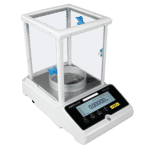 Balances Analytiques et Semi-Micro Solis
Avec un écran graphique haute résolution et des fonctions intuitives, les balances analytiques Solis offrent une excellente solution aux laboratoires.
ver más detallesCapacité : 120g à 510g
Précision : 0.01mg/0.1mg à 0.0001g
Voir les Détails Complets -
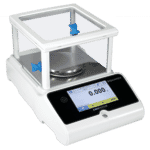 Balances de Précision Equinox
Avec un écran tactile en couleur haute résolution, les balances de précision Equinox fournissent une opération intuitive et des fonctions facilement accessibles. L'Equinox produit des résultats exceptionnellement précis pour les laboratoires, l’éducation scientifique et les sites de production.
ver más detallesCapacité : 360g à 8200g
Précision : 0.0.01g à 0.01g
Voir les Détails Complets -
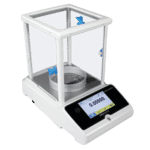 Balances Analytiques et Semi-Micro Equinox
Avec un écran tactile en couleur haute résolution, les balances analytiques Equinox fournissent une opération intuitive et des fonctions facilement accessibles. L'Equinox produit des résultats exceptionnellement précis pour les laboratoires, l’éducation scientifique et les sites de production.
ver más detallesCapacité : 120g à 510g
Précision : 0.01mg/0.1mg à 0.0001g
Voir les Détails Complets -
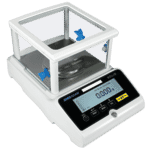 Les Balances de Précision Solis
Avec un écran graphique haute résolution et des fonctions intuitives, les balances de précision Solis fournissent une excellente solution pour les laboratoires.
ver más detallesCapacité : 360g à 8200g
Précision : 0.001g à 0.01g
Voir les Détails Complets
FAQ
GLP stands for Good Laboratory Practices. They're a set of guidelines developed by the FDA to help guarantee that the data developed and used in scientific studies is accurate, reliable and traceable. For weighing scales, particularly semi-micro, analytical and precision balances, the requirements are simple, but specific. The balances can't just record the weight of an item, it also has to record the date and time it was taken, and the operator ID of the person using the balance. If the balances record that information and are evaluated, they can be labelled GLP Compliant.
Checkweighing and counting, or parts counting, are two different applications that can be found on a weighing scale or balance.
Checkweighing involves setting high and low weight limits, like 10g and 13g. If the item on the pan comes to below 10g or above 13g, your scale or balance will let you know. It can notify you with a sound, lights, or even with a color-changing screen, like with the new Polaris series. Checkweighing is particularly helpful in quality control.
Parts counting is what it sounds like - it helps you count large quantities of identical parts. By weighing a small sample of 5 or 10 pieces, the balance can take an average weight and apply that when counting 100+ pieces (or until they surpass the capacity). Parts counting is very helpful during inventory season, or even just making sure you have the same sample size every time.