
Poids d'étalonnage
-
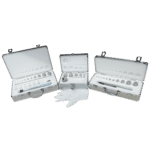 Coffret de Poids OIML
L'ensemble de poids OIML d’Adam est disponibles en plusieurs classes. Les poids E1 et E2 offrent une précision de calirbage superbe pour les balances analytique et de précision. Les poids F1 ne conviennent pas pour le calibrage des balances de précision. Les poids M1 sont excellents pour le calibrage des balances compactes.
ver más detallesVoir les Détails Complets -
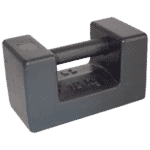 Poids OIML de Classe M1 - en Fonte
Les poids en fonte de Adam Equipment sont fabriqués aux normes de l’OIML. Offert en classe OIML M1, ces poids sont disponibles dans des capacités élevées et sont excellents pour le calibrage des balances plus grandes.
ver más detallesVoir les Détails Complets -
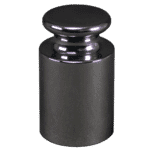 Poids OIML
Les poids OIML d’Adam sont disponibles en ensembles ou séparément. Les poids individuels sont emballés dans une boîte en plastique, tandis que les poids ensembles sont placés dans une boîte en aluminium doublée, avec forceps et gant blanc en coton.
ver más detallesVoir les Détails Complets
FAQ
What calibration weight class you purchase depends on the type of balance you own.
If you work with a semi-micro balance, we recommend E1 class weights. For analytical balances, class E2. Class F1 is sufficient for calibrating precision balances, while M1 weights are ideal for compact balances, bench and floor scales.
While it may be tempting to "level up" and use E1 weights for a compact balance, you'll find that E1 weights are priced according to their superior precision.
We go more in depth on this topic in our blog.
Stainless steel weights are considered more finely designed than cast-iron calibration weights, and they're used for different purposes. Stainless steel weights are used to calibrate lab balances, compact balances and even some more precise bench scales. Meanwhile, cast-iron weights can weigh into the hundreds of kilograms, so they're better for calibrating floor and platform scales.
To properly maintain your calibration weights, keep them in their case when they're not in use. They should be stored in a cool, dry place on a sturdy surface.
When using your calibration weights, never touch them with your bare hands. The oils on your fingers can stick to the stainless steel, impacting its weight as an immediate consequence and even degrading the steel as a long-term issue. Use cotton gloves or tweezers.
Avoid scratching or dragging your weights across the weighing pan when picking them up or setting them down. Not only can this scratch the weight, it can also encourage static to develop from the friction.
Use a soft-bristled brush or a micro-fibre towel to keep lint and dust away from the weight. They can both add a minute amount of weight that seems insignificant, but matters when you begin weighing to the fifth decimal place.